Agave mayoensis
Agave eduardii
Agave houghii
Agave vilmoriniana A. Berger
Octopus agave
Octopus agave originated in Mexico. Plants may bloom in as few as 7-10 years, much sooner than most agaves.
Plants: Like most agaves, this is an evergreen that dies after blooming. It reaches 3–4′ (91–121 cm) in height, and a width of up to 6′ (1.8 m).
Leaves: Long blue-green leaves curve outward and downward, forming a basal rosette. The leaves have a velvety texture. The plant resembles an octopus waving its leafy tentacles, hence the common name. The rosette of leaves is up to 3′ (91 cm) high and 5′ (1.5 m) around. Each leaf is crescent-shaped in cross section.
Flowers: The flowers form from a large central panicle 10–16′ (3–4.9 m) in height. Flowers are yellow-white to yellow, appearing from spring to summer.
Fruits: Small bulbils propagate this species.
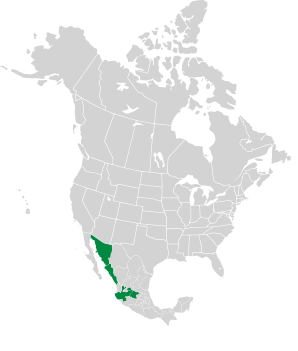
Habitats: Desert cliffs, typically at elevations of 1969–5577′ (600–1700 m).
Online References:
References:
Irish, Mary & Irish, Gary, Agaves, Yuccas and Related Plants: A Gardener’s Guide, Timber Press, 2000, p. 178

5/24/2009 · Arizona Sonora Desert Museum, Tucson, Arizona 
| Kingdom | Plantae | Plants, but not fungi, lichens, or algae (from Stearn's Botanical Latin) |
| Subkingdom | Tracheobionta | Vascular plants—plants with a “circulatory system” for delivering water and nutrients |
| Division | Magnoliophyta | Flowering plants, also known as angiosperms |
| Class | Liliopsida | Monocots (plants with a single seed leaf); includes the lily family |
| Subclass | Liliidae | Includes lilies, orchids, and many others |
| Order | Asparagales | A diverse group that includes asparagus |
| Family | Asparagaceae | Agaves, asparagus, hyacinths, and others |
| Genus | Agave | From Greek, meaning “noble” |
| Species | vilmoriniana | In honor of French seed producer Maurice de Vilmorin |
Agave vilmoriniana description by Thomas H. Kent, not updated.

© FloraFinder.org. All rights reserved.