Aesculus pavia L.
Red buckeye
Red buckeye is a North American native plant. Aesculus, a name chosen by Linnaeus, means “edible acorn,” but this name was meant for horse chestnuts: red buckeye seeds are poisonous. The species, pavia, is named for the Dutch botanist, Peter Paaw.
Plants: These shrubs are 12–20′ (3.7–6.1 m) in height, and about the same in diameter.
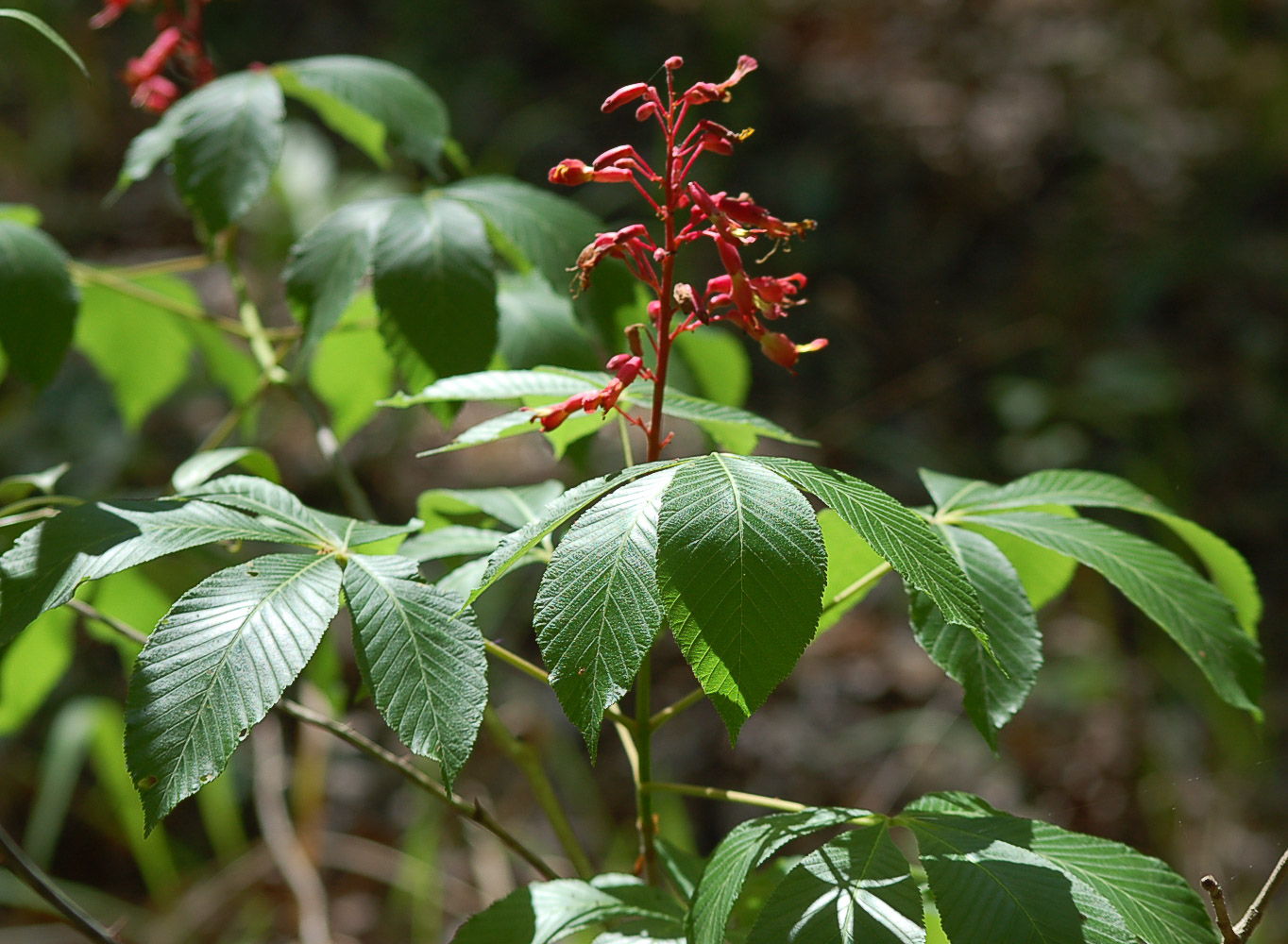
Leaves: Palmate clusters of five (sometimes seven), emanating from a common point. They are a dark, shiny green, with fine serrations and often an orange midvein, 5–10″ (12–25 cm) long.
Flowers: Clusters of five (sometimes seven), emanating from a common point. They are a dark, shiny green, with fine serrations and often an orange midvein, 5–10″ (12–25 cm) long.
Fruits: Somewhat pear-shaped, 1½–3″ (3.8–7.6 cm) around, containing three red chestnut-like seeds per fruit. The outer husk enclosing the seeds is tan.
Habitats: Low rich wooded valleys, at bluff bases, on wooded slopes and along streams.
Edibility: Poisonous  Seeds and young shoots are deadly poisonous, and other parts of
the plant are not palatable. Some native cultures crushed the poisonous parts of these plants and
immersed them in water to stun and capture fish.
Seeds and young shoots are deadly poisonous, and other parts of
the plant are not palatable. Some native cultures crushed the poisonous parts of these plants and
immersed them in water to stun and capture fish.
Online References:
Carolina Nature (great photos)
References:
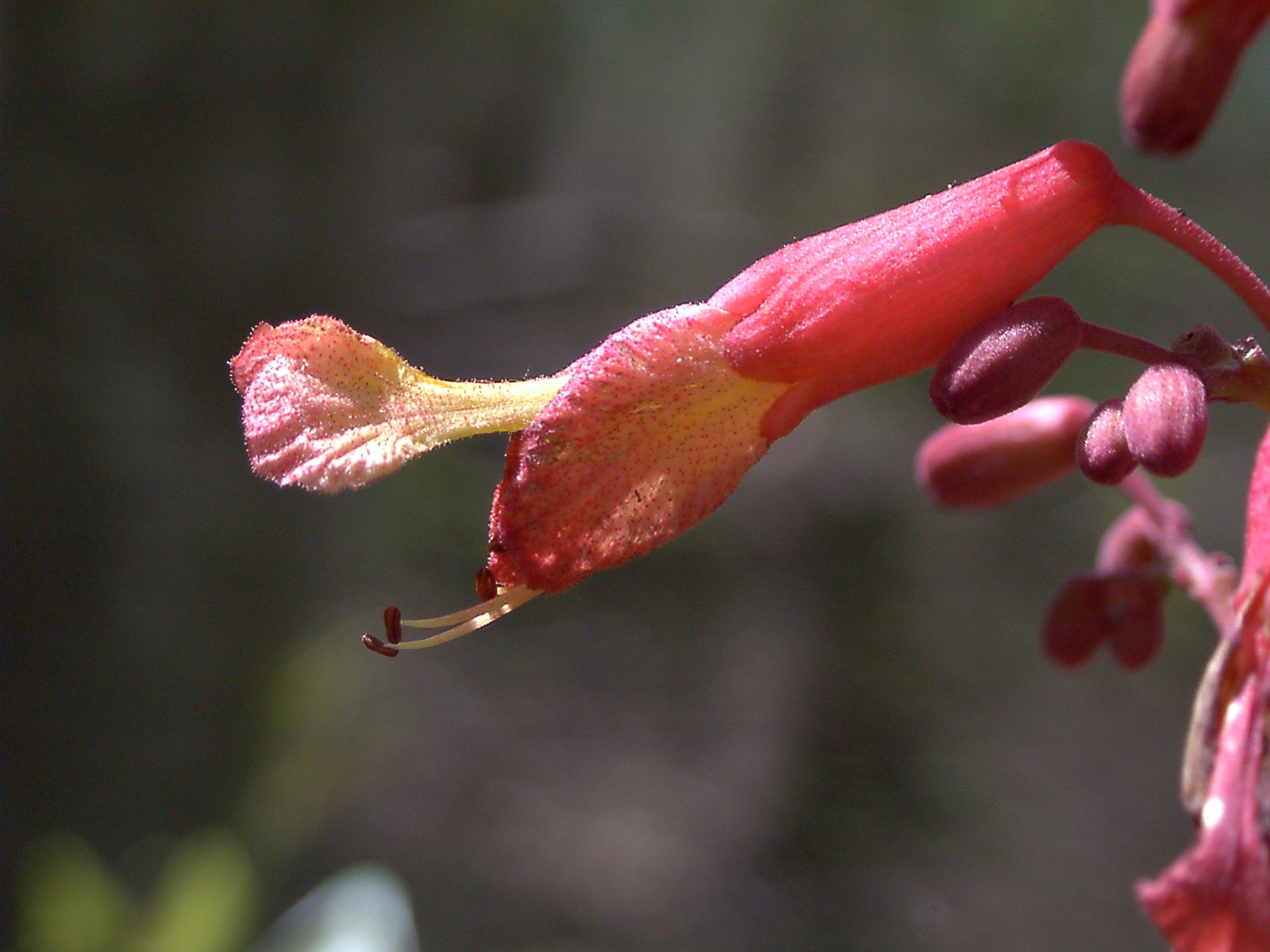
3/26/2000 · Memphis, Tennessee · By Tim Chandler 
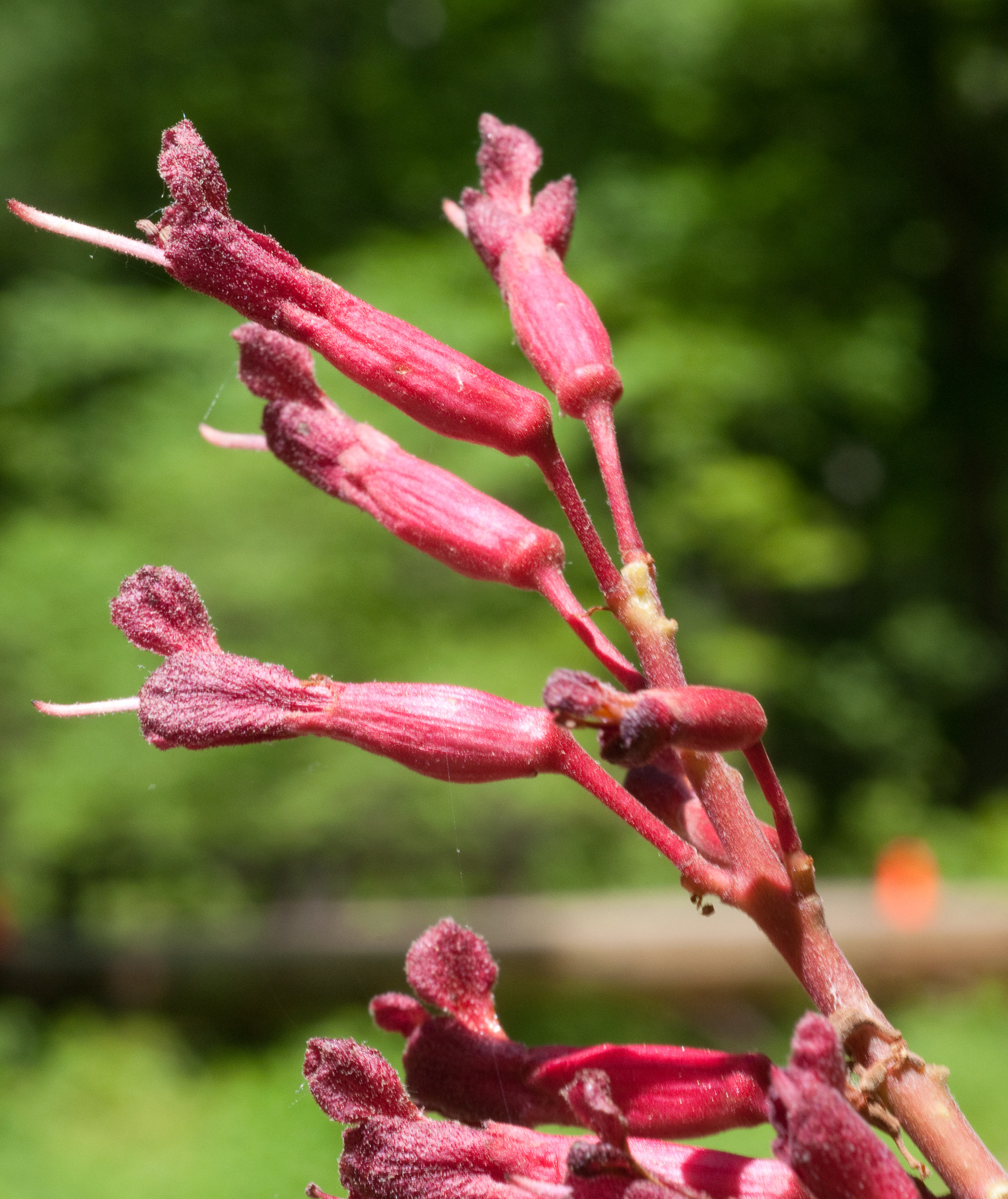
5/15/2010 · Garden in the Woods, Framingham, Massachusetts · ≈ 3½ × 4″ (9.2 × 10 cm) 
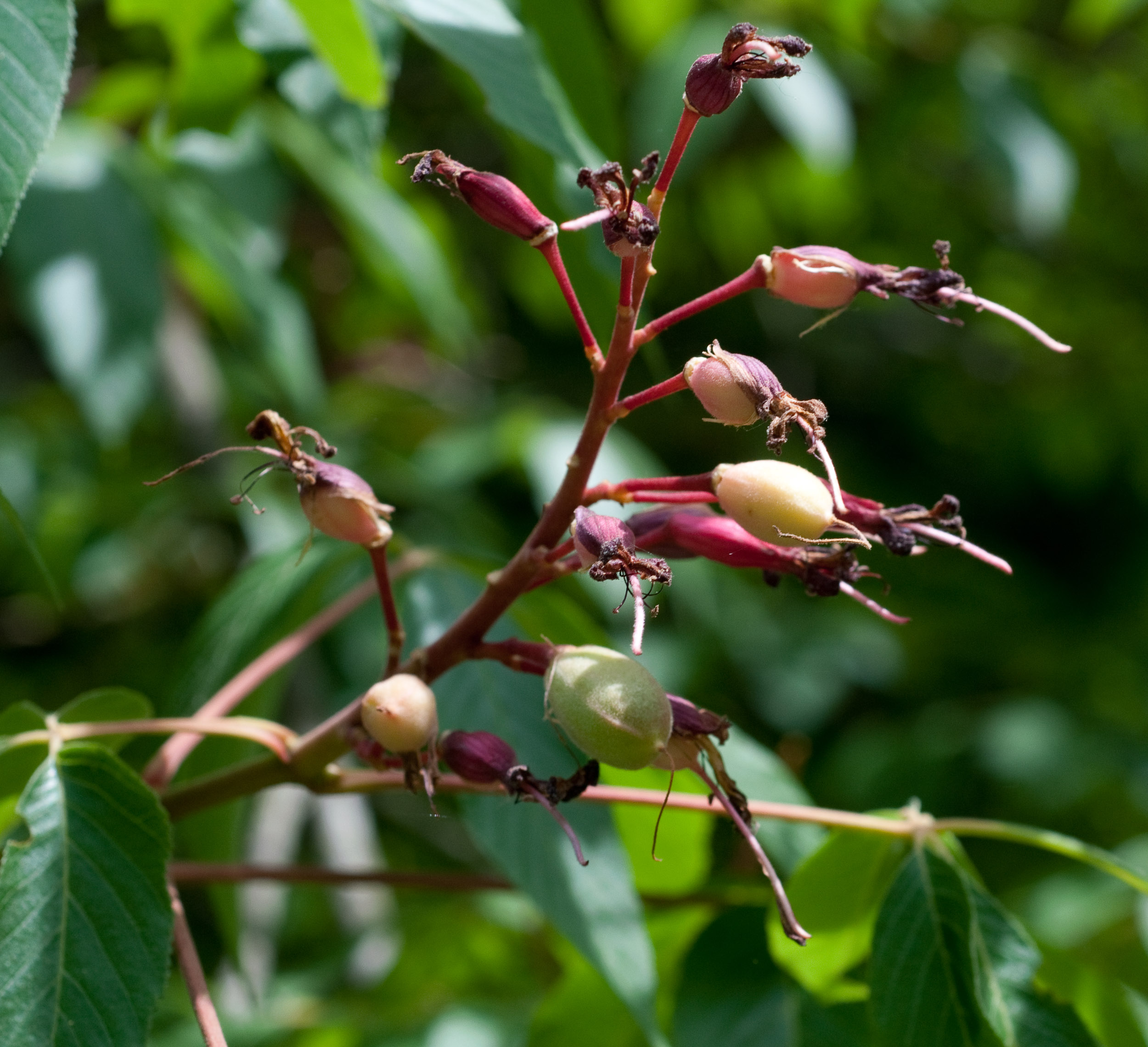
5/22/2010 · Garden in the Woods, Framingham, Massachusetts · ≈ 1½ × 1½′ (53 × 48 cm) 
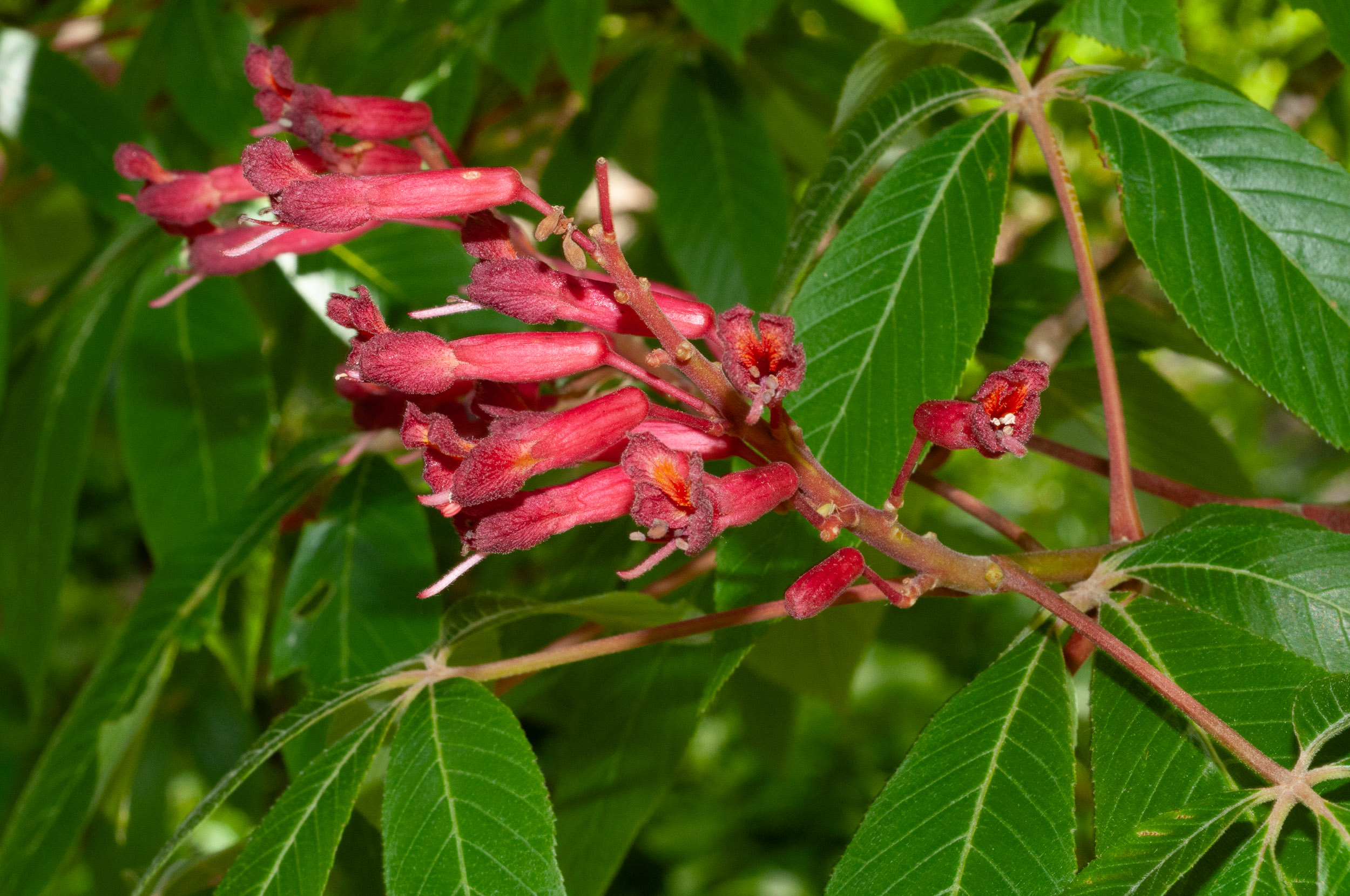
5/15/2010 · Garden in the Woods, Framingham, Massachusetts · ≈ 8 × 5″ (19 × 13 cm) 
3/26/2012 · By Jacquelyn Boyt 
| Kingdom | Plantae | Plants, but not fungi, lichens, or algae (from Stearn's Botanical Latin) |
| Subkingdom | Tracheobionta | Vascular plants—plants with a “circulatory system” for delivering water and nutrients |
| Division | Magnoliophyta | Flowering plants, also known as angiosperms |
| Class | Magnoliopsida | Dicotyledons—plants with two initial seed leaves |
| Subclass | Rosidae | Roses, legumes, proteas, dogwoods, hydrangeas, mistletoes, euphorbias, grapes, many more |
| Order | Sapindales | Includes citrus; maples, horse-chestnuts, lychees and rambutans; mangos and cashews; frankincense and myrrh; mahogany and neem |
| Family | Sapindaceae | Soapberry family |
| Genus | Aesculus | Means “edible acorn” (though some species are definitely not edible) |
| Species | pavia | Named for Dutch botanist Peter Paaw (Latinized as Petrus Pavius) |

Aesculus pavia description by Thomas H. Kent, not updated.

© FloraFinder.org. All rights reserved.