Aesculus parviflora Walter
Bottlebrush buckeye
Bottlebrush buckeye is a deciduous shrub native to the southeastern United States.
Plants: A dense, mounded, multistemmed shrub, 6–12′ (1.8–3.7 m) tall. Plants spread by suckering.
Leaves: Opposite, palmate leaves have 5-7 leaflets. Leaflets are dark green, 4½–9 ⨉ 1¾–4″ (12–22 ⨉ 5–10 cm), with smooth edges. The central leaflet in largest. In the fall, leaves are yellow and green.
Flowers: Attractive upright-facing panicles are conical or cylindrical in shape, 8–20″ (20–50 cm) long. Flowers are tubular, white, with long pink stamens and red anthers. The white inflorescences resemble bottle brushes, hence the common name.
Fruits: Glossy inedible, pear-shaped nuts—“buckeyes”—are encased in bright yellow or light brown husks that are 2–3″ (5–7.6 cm) long.
Habitats: Moist, shaded, forest understories, with well-drained soils.
Edibility:  Highly poisonous to people and pets if
ingested.
Highly poisonous to people and pets if
ingested.
Online References:

5/23/2024 · Coastal Maine Botanical Gardens, Boothbay, Maine 
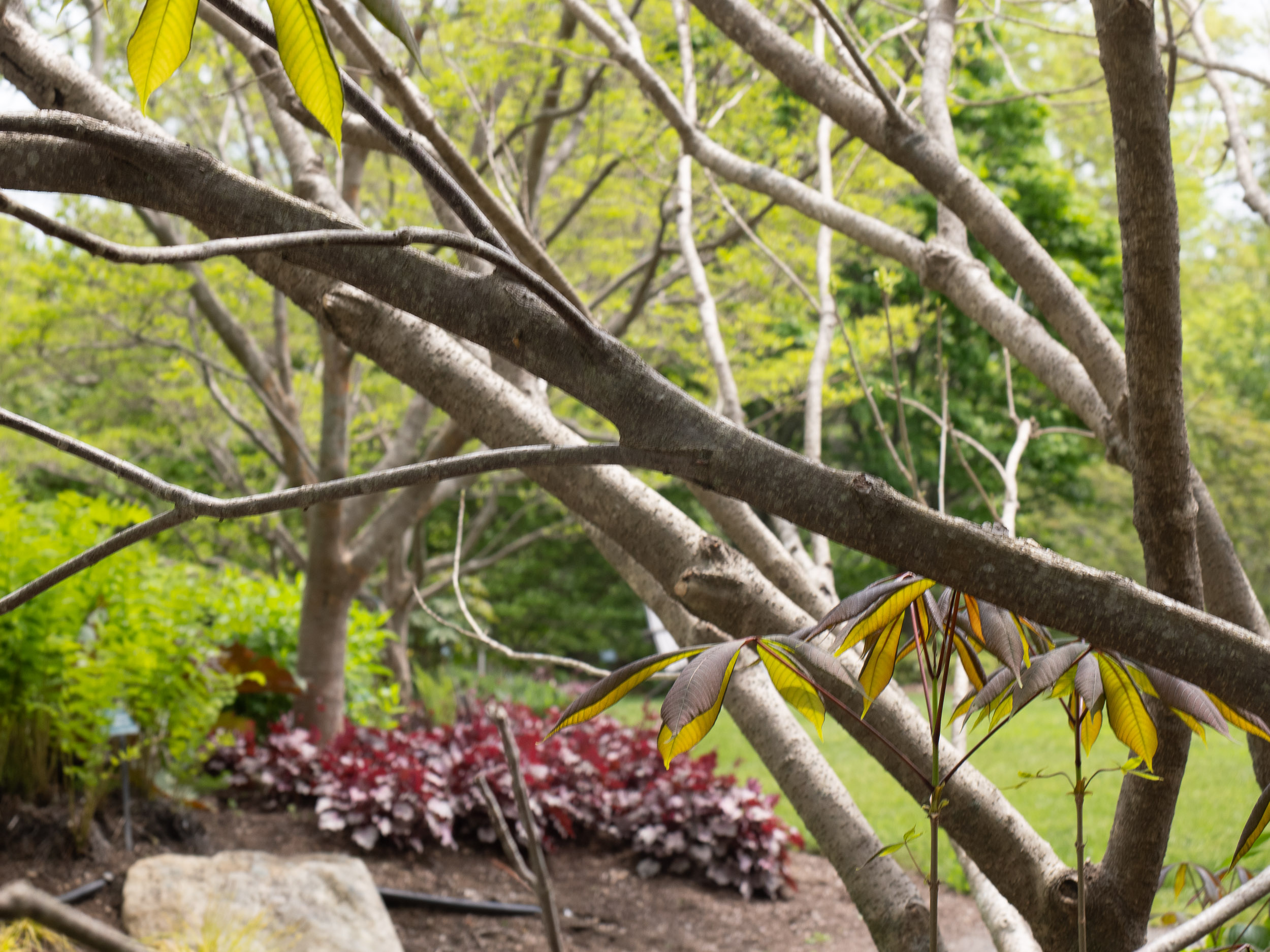
5/23/2024 · Coastal Maine Botanical Gardens, Boothbay, Maine 
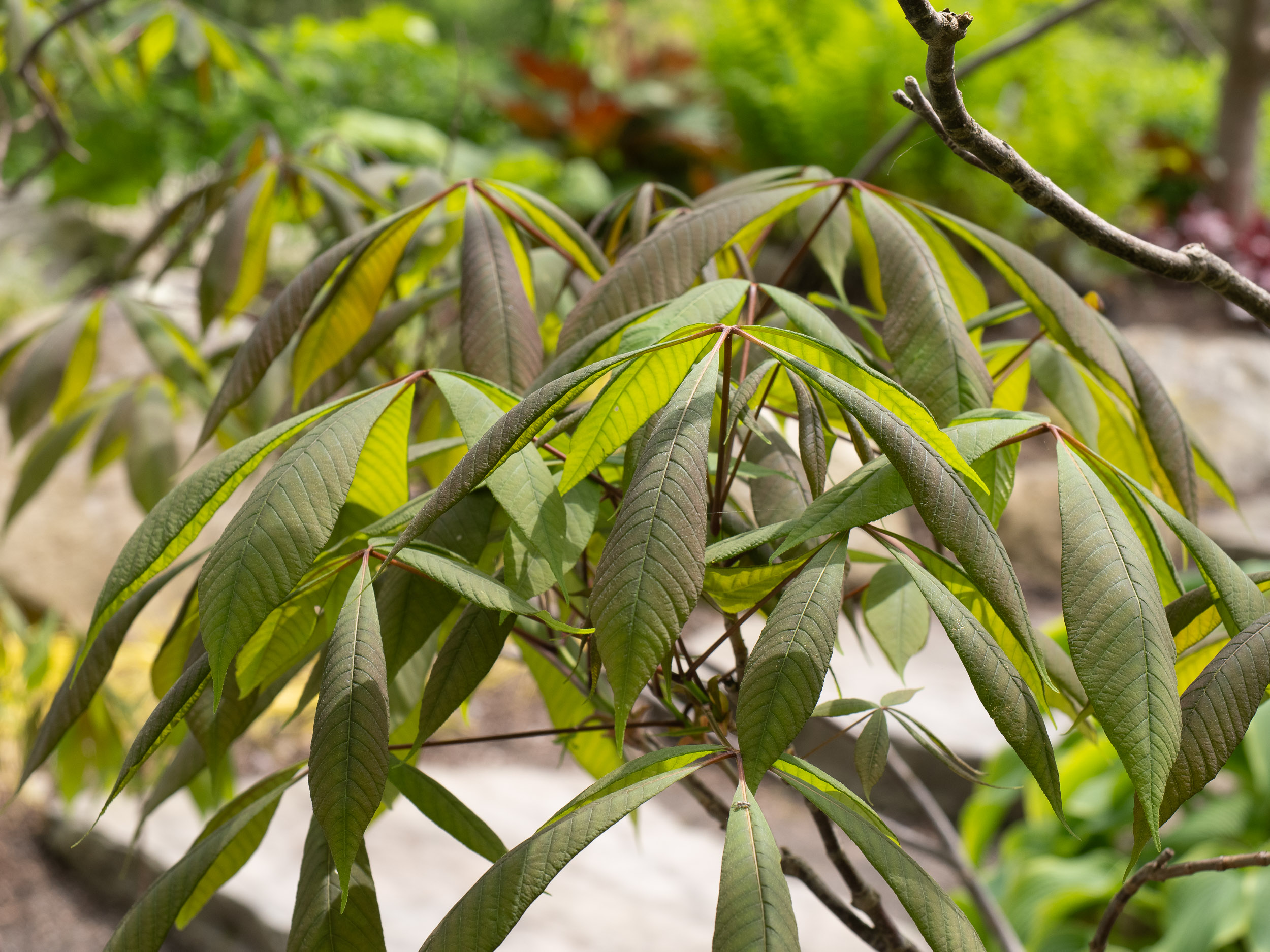
5/23/2024 · Coastal Maine Botanical Gardens, Boothbay, Maine 
| Kingdom | Plantae | Plants, but not fungi, lichens, or algae (from Stearn's Botanical Latin) |
| Subkingdom | Tracheobionta | Vascular plants—plants with a “circulatory system” for delivering water and nutrients |
| Division | Magnoliophyta | Flowering plants, also known as angiosperms |
| Class | Magnoliopsida | Dicotyledons—plants with two initial seed leaves |
| Subclass | Rosidae | Roses, legumes, proteas, dogwoods, hydrangeas, mistletoes, euphorbias, grapes, many more |
| Order | Sapindales | Includes citrus; maples, horse-chestnuts, lychees and rambutans; mangos and cashews; frankincense and myrrh; mahogany and neem |
| Family | Sapindaceae | Soapberry family |
| Genus | Aesculus | Means “edible acorn” (though some species are definitely not edible) |
| Species | parviflora | From the Greek parvus, “small,” and flora, “flower,” hence “small-flowered” |
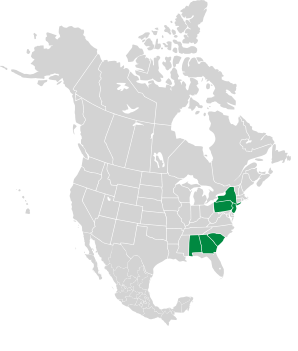
Aesculus parviflora description by Thomas H. Kent, not updated.

© FloraFinder.org. All rights reserved.