Acer pseudoplatanus L.
Sycamore maple
These “sycamores” are not related
Acer pseudoplatanus
Platanus occidentalis


|
Acer pseudoplatanus L. Sycamore maple These “sycamores” are not related | ||
| You are here Acer pseudoplatanus |
Platanus occidentalis |
|
|---|---|---|
| Common Name | |
|
| Plant | Up to 66–115′ (20–35 m) in height, with a broad crown that is oval or rounded in shape. As the tree ages, smooth gray bark becomes brown, and begins breaking into scales, peeling to reveal pale brown, pinkish, or green inner bark. Don’t confuse the sycamore maple tree with the dissimilar sycamore tree, Ficus sycomorus. | 98–131′ (30–40 m) high, up to 6½′ (2 m) in diameter. Bark is mottled, with large irregular chunks like puzzle pieces that flake off, revealing differently colored bark beneath. Bark colors include tan, light gray, white, cream, and olive green. |
| Leaves | Palmate, five-lobed, similar to those of sugar maples in overall shape, but with more serrations. They are 4–10″ (10–25 cm) in size. | 4–9″ (10–22 cm) in size, somewhat resembling maple leaves, with 3-5 lobes. |
| Flowers | Greenish-yellow and hang in dangling panicles. | Male flowers are dark red, while female flowers are light green tinged with red. Both are ball-shaped. |
| Fruit | Samaras are in pairs, twirling to the ground like little helicopters when ripe. | Bumpy brown balls about 1″ (2.5 cm) around, on stems up to 3″ (7.6 cm) long. Bumps separate into airborne seeds after drying. |
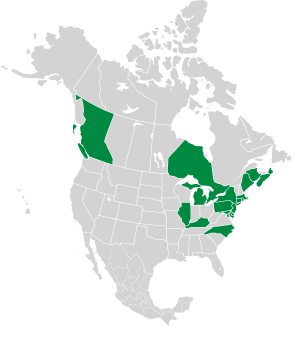
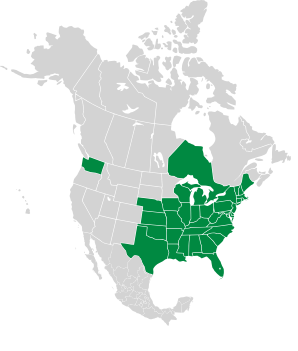
| Range/ Zones |
|
|
| Habitats | Mixed deciduous forests at altitudes between 2297–6562′ (700–2000 m) | Lowland areas, typically reaching its largest size along streams, rivers and flood plains. |
Acer pseudoplatanus description by Thomas H. Kent, not updated.
© FloraFinder.org. All rights reserved.